


Elementary Education / Child Development
"I Can Tell by Lunchtime on the First Day." A 1st Grade Teacher Shares What She Notices About Handwriting That Most Parents Never See.
After 13 years teaching Kindergarten and 1st grade, Ms. Jennifer Brooks has seen nearly every handwriting struggle there is. We asked her the questions parents wish they could ask at parent-teacher conferences.
Published by the KiddoSpace Education Team | 8 min read
Every August, Ms. Jennifer Brooks stands at the door of her 1st grade classroom at an elementary school in Denver, Colorado, and watches 28 children walk in for their first day.
By lunchtime, she already has a quiet sense of which children are going to find handwriting difficult by winter break.
Not because she has written anyone off. Not because she expects the worst. But because after 13 years of teaching children to write, she knows exactly what to look for. And she knows that the vast majority of parents have no idea any of these warning signs even exist.
"Parents often come to me at parent-teacher conferences and say their child has been practicing and practicing but nothing is improving. And I always ask the same first question: how are they holding their pencil at home? That usually tells me everything."
Ms. Jennifer Brooks, 1st Grade Teacher, Denver, CO
What follows is a conversation with Ms. Brooks about what she actually sees in the classroom every day, why the most common advice parents give their children backfires, and the practical things she tells families when handwriting is causing tears at homework time.
"Most children who struggle are struggling with something most parents never think about."
Before we get into the specifics of Ms. Brooks's advice, it helps to understand the problem she encounters most often.
In a typical 1st grade class, she estimates that around a third of children arrive with some kind of pencil grip issue already in place. Most of them developed it in Kindergarten or Pre-K, and by the time anyone notices, it has already become deeply embedded muscle memory.
"Habits are genuinely hard to break," she explains. "Once a child has been gripping a pencil the wrong way for a year or two, changing it feels deeply uncomfortable to them. They get frustrated. They say their hand hurts. Parents often interpret that as the child being difficult or avoiding the work. But the child is telling the truth. Their hand does hurt, because we're asking them to undo something their muscles have memorized."
This is what makes most at-home handwriting interventions so frustrating for parents and children alike. The focus lands on the letters themselves: are they the right size, do they fit between the lines, do they look neat. But the letters are a symptom. The underlying cause is almost always physical: incorrect grip, poor posture, or a letter formation habit that looks fine in isolation but falls apart the moment the child is asked to write quickly.
"I see a lot of children who have done worksheet after worksheet," Ms. Brooks says. "But more practice on top of wrong technique just reinforces the wrong technique. You end up with a child who has practiced being bad at handwriting hundreds of times. The repetition makes the problem worse, not better."
So what does right practice actually look like? We asked her to walk us through it.
The Interview
What Teachers Know That Parents Don't
We asked Ms. Brooks the questions parents most often raise at parent-teacher conferences, and a few they probably wish they had.
Q: What is the very first thing you check when a child is struggling with handwriting?
"Grip. Always grip first. The way a child holds a pencil affects everything downstream: how much pressure they apply, how much control they have, how quickly their hand tires.
The correct grip is called the tripod grip. The pencil rests in the natural groove between the thumb and index finger, held lightly with the thumb on one side and the index finger on the other, with the middle finger underneath for support. It sounds simple, but most children who struggle are using what I call a 'fisted grip' or a 'four-finger wrap.' Too many fingers involved. The pencil ends up being controlled by the whole hand rather than the fingertips.
The consequence of a poor grip is almost always excessive pressure. The child presses down hard because their grip doesn't give them the fine motor control they need. After 10 to 15 minutes of that, their hand is genuinely aching. They want to stop. And the adult in the room thinks the child is being lazy, when actually the child is in real physical discomfort."

The tripod grip positions the thumb, index, and middle finger for maximum control with minimum fatigue.
Q: What else do you look for, beyond grip?
"Posture and paper position. These are the two things parents almost never think about, but they have an enormous effect on how a child writes.
Children who hunch over their desk have to twist their wrist to compensate. That puts the hand in an awkward position before they even write a single letter. I always tell parents: if your child's nose is getting close to the page, something is wrong further up the chain.
Paper position is surprisingly important and almost universally ignored. The page should be tilted slightly, about 20 to 30 degrees to the left for a right-handed child, and to the right for a left-handed child. Most kids just plop it flat in front of them, which means their writing arm has to come across the body at an unnatural angle. You then see the child tilting their whole body to compensate. Their writing gets worse. Nobody connects it back to the angle of the paper.
I also pay close attention to pencil pressure. If I can feel the impression of a letter on the page below, the child is pressing far too hard. That's almost always a grip issue. If the pencil barely makes a mark, they haven't yet developed the right muscles. Both are fixable, but you have to know what you're looking for."
Q: What about the letters themselves? Do formation habits matter as much as people think?
"Letter formation matters, but it's the last thing I'd address, not the first. Fix grip and posture first. In many cases, once you do that, letter quality improves on its own because the child now has the physical control to do what they're already trying to do.
That said, the most common formation problem I see is children starting letters from the bottom rather than the top. The letter 'a', for example, should begin with a circular counter-clockwise movement starting from near the top. Most children who haven't been explicitly taught will start from the bottom and go clockwise. The result looks roughly similar in the early grades, but the habit causes real problems once they move into cursive or connected writing.
Letters that look correct but were formed in the wrong stroke sequence are another common issue. 'k' and 'x' are surprising culprits. They look fine in isolation, but the wrong stroke order makes it nearly impossible for the child to write them quickly and neatly under any pressure.
What I always come back to is this: handwriting is a motor skill. Like riding a bike or learning to swim. The brain needs to physically feel the correct movement, not just see it. A child can study an arrow showing the direction of a stroke dozens of times and still not replicate it reliably, because their hand has never experienced what that movement actually feels like from the inside."
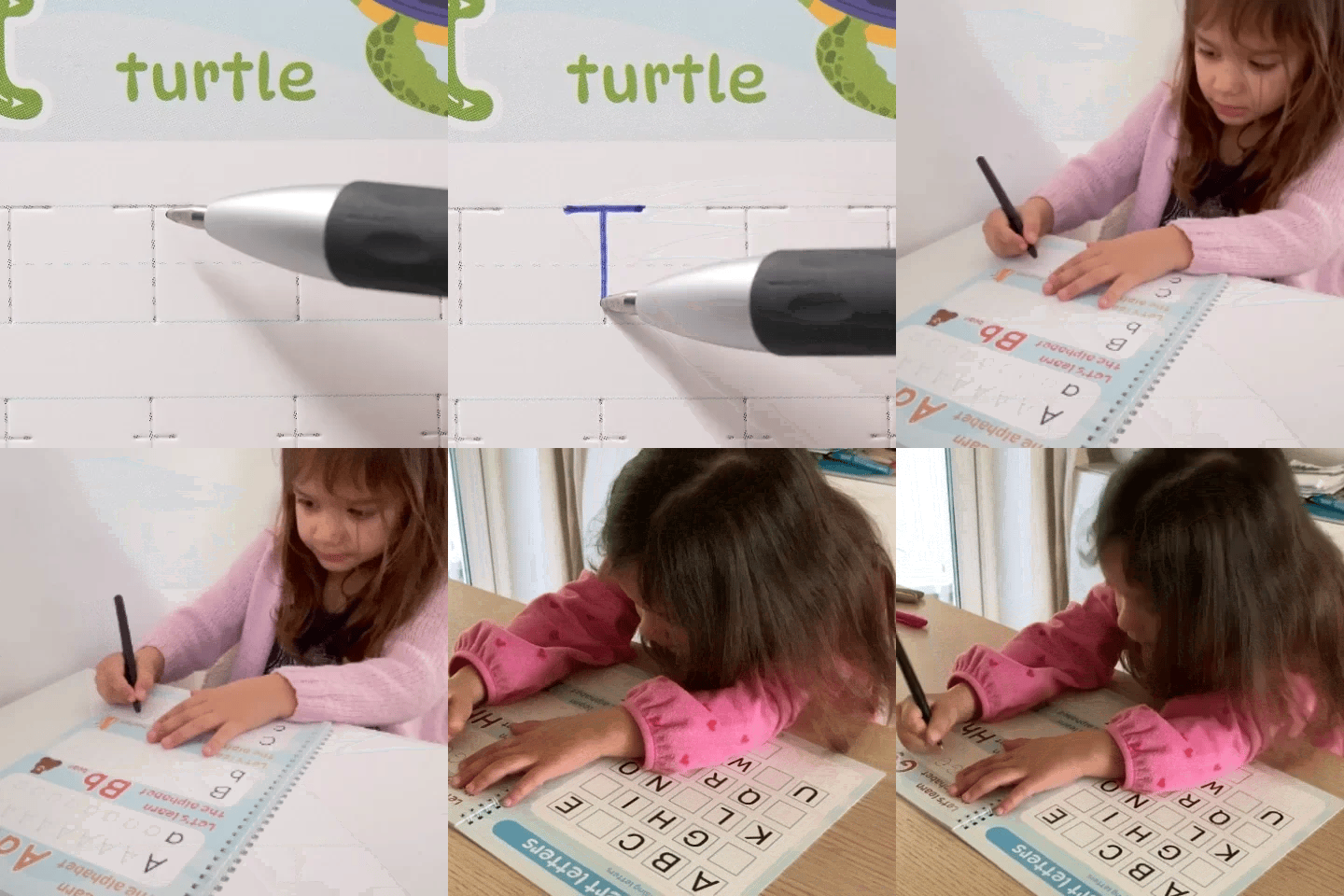
Tactile guidance teaches the hand to feel the correct stroke direction, rather than just see it on a page.
Q: When parents come to you for advice about practicing at home, what do you tell them?
"Three things. First: check the grip every time, not just during writing practice. If your child is coloring, drawing, doing anything with a pencil or pen, that's an opportunity to reinforce the correct grip. Motor habits form from repetition across all activities, not just homework time. Use those everyday moments.
Second: shorter sessions, more often. Ten minutes every day is worth far more than an hour on the weekend. Research on motor learning is very clear on this. Muscle memory builds through consistent repetition over time, not through long, exhausting sessions that the child dreads.
Third, and this is the one parents find hardest to act on: remove the pressure of permanent mistakes. When a child writes something wrong and it's there on the page in ink, permanently, there's real anxiety that attaches to that moment. That anxiety actively interferes with learning. Children who are worried about making a mess become hesitant. They stop taking the small risks that are necessary for improvement.
Finding ways to practice where mistakes genuinely don't matter, where the child feels free to try again without any lasting mark on the page, makes an enormous difference in how quickly a child progresses. That's not just my experience in the classroom. It's backed up by research on how children learn motor skills."
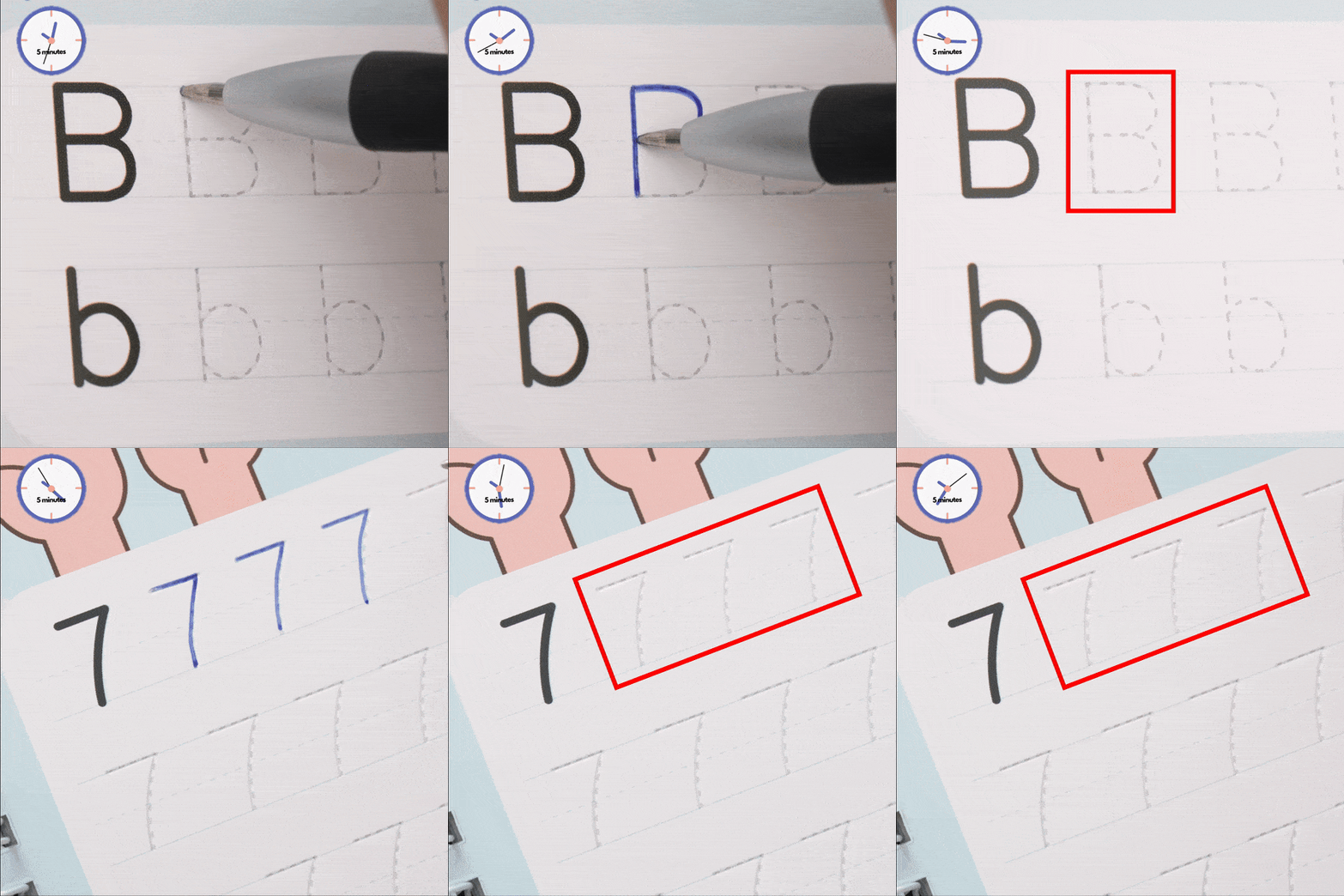
When mistakes disappear in minutes, children relax and try more freely. That freedom is where real learning happens.
Q: What's the single thing you wish you could tell every parent before their child starts 1st grade?
"That the goal at this stage is not beautiful handwriting. The goal is correct foundations.
If you get the grip right, the posture right, and the letter formation right, the beautiful handwriting follows naturally over time. But if you skip the foundations and focus only on how the letters look, you are building on sand.
I've seen children in 3rd grade and 4th grade who are bright, capable, motivated kids, but who are genuinely exhausted by writing. Every piece of work takes enormous effort. They get tired halfway through a paragraph. They can't keep up with note-taking or in-class assignments. And it all traces back to a grip issue that nobody addressed in Kindergarten or 1st grade. By 3rd grade it's a much bigger job. It's not impossible to fix, but it requires so much more effort than it would have taken two or three years earlier.
The foundation years really are the foundation years. What gets built there matters more than most families realize."
The 4 P's: What to Check Every Time Your Child Picks Up a Pencil
Based on everything Ms. Brooks shared, here is a practical checklist to run through before any writing session:
Posture
Is your child sitting up straight with both feet flat on the floor? Their forearm should rest on the desk, not hang off the edge. If their nose is near the page, they're hunching.
Paper
Is the page tilted slightly? For right-handed children, tilt the top of the page gently to the left. For left-handed children, tilt it to the right. A flat page is almost never the right position.
Pencil Grip
Is your child using the tripod grip? Pencil resting in the groove between thumb and index finger, supported underneath by the middle finger. Knuckles should not be white. The hold should be light enough that you could gently pull the pencil away.
Pressure
Can you feel heavy indentations on the page below? If so, the grip is the root issue, not just the pressure. Work on loosening the hold before anything else.
Getting all four right, consistently, takes real practice. And for most children, it takes more than a parent pointing at their hand and saying "hold it like this."
The Tool Ms. Brooks Started Recommending to Parents
Several parents in Ms. Brooks's class last year came to her mid-semester, frustrated. Their children had been practicing at home with no visible improvement. They had bought workbooks from Target. They had watched YouTube tutorials together. They had sat next to their children page after page, pointing at each letter and explaining how it should be formed.
Nothing was clicking.
"The problem with most workbooks," Ms. Brooks explains, "is that they show children where letters should go. But they don't help children feel the correct movement. And with motor skills, feeling is everything. A child can look at an arrow showing stroke direction many times and still not be able to replicate it reliably, because their hand has never experienced what that movement actually feels like."
Around that time, a few of those parents mentioned a product their children had started using at home. A few weeks later, Ms. Brooks began noticing differences in the classroom.

The KiddoSpace Handwriting Practice Kit includes everything a child needs to build correct foundations at home.
The product was the KiddoSpace Handwriting Practice Kit. When Ms. Brooks looked into it, what caught her attention was the grooved pages.
"Most practice tools are visual. Lines on a page. Arrows showing direction. This one is tactile. The child's hand is physically guided through the correct formation path by a groove in the page itself. That engages muscle memory in a way that visual cues simply cannot. When the child moves their pen in the right direction, the groove confirms it. When they drift off course, they feel it immediately. That feedback loop is what actually changes behavior."
What's included in the kit:
- 4 Grooved Practice Books covering letters, numbers, math, and drawing shapes. Each page has physically raised grooves that guide the hand through the correct stroke sequence.
- Disappearing Ink Pens (2 pens plus 10 refills, with 10 additional refills free). Ink fades within minutes, allowing every page to be reused and removing the anxiety of permanent mistakes.
- Ergonomic Pencil Grips (4 grips) shaped specifically to position the thumb, index finger, and middle finger into the correct tripod grip naturally.
- 50 Printable Practice Sheets to help children transition from grooved guidance to flat paper once muscle memory is established.
Research on motor learning is clear: children need somewhere between 50 and 100 correct repetitions per letter before the movement pattern becomes reliably encoded. With a standard workbook, you run out of pages long before reaching that threshold. With a system built for unlimited repetition, getting those practice reps in actually becomes possible.

Children who write with less physical strain concentrate more and produce noticeably better results over time.
What Parents Are Saying
Verified customer reviews from families across the US.
"My son's 1st grade teacher flagged his grip at the very first parent-teacher conference. I ordered this kit that same week, he used it a few times, and by the following month she had already noticed a difference in the classroom. I was genuinely amazed. He actually asks to use it, which I never expected."
Rachel T., Chicago, IL
"Our daughter used to cry every time we did handwriting at home. She hated making mistakes on the page. The disappearing ink changed everything. She started treating it like a game rather than a test. Six weeks in, her teacher said her letter formation had improved considerably. We could not be more thrilled."
James and Lauren K., Austin, TX
"We had tried three different workbooks over two years. None of them stuck. This kit is different because it physically guides her hand rather than just showing her what to do. My daughter said it feels like 'the pen knows where to go.' Eight weeks later, her handwriting at school is unrecognizable. Her teacher brought it up without us saying a word."
Priya M., Portland, OR
"My son is in Kindergarten and I wanted to get ahead of any problems before they became habits. The grips alone were worth the price. He went from a white-knuckled fist grip to a proper tripod hold within two weeks. Ten minutes a day and you can genuinely see it working."
Natalie C., Seattle, WA

When the pressure is removed and the method is right, children genuinely want to practice.
Is It Worth It?
Most parents who rely on printed workbooks spend over $200 per year replacing books as their children work through them. Those workbooks give more pages to practice the same technique, but they do not address grip, posture, or the physical experience of correct movement. Many families spend years buying more books and wondering why nothing is improving.
The KiddoSpace kit is currently $34.99 (down from $137.89), comes with a 90-day money-back guarantee, and ships free. It is designed for 10-minute daily sessions, exactly what Ms. Brooks and the research recommend: short, consistent, low-pressure practice that builds muscle memory without wearing the child out.
A one-time investment vs. a recurring cost:
Typical workbook approach
$200+ per year. New books each time. No grip support. No tactile guidance. Pages run out.
KiddoSpace Kit
$34.99 once (was $137.89). Unlimited repetitions. Addresses grip, formation, and anxiety. Pages never run out.
90-Day Money-Back Guarantee
If you do not see a meaningful improvement in your child's handwriting within 90 days of consistent use, KiddoSpace will refund you in full. No questions asked.
Bonus for the first 20 customers today
Order today and receive bonus gifts with your kit. Limited to the first 20 orders placed each day.
$34.99 (was $137.89, 74% off) | Free US shipping | 90-day money-back guarantee
The Kit
KiddoSpace™ Handwriting Practice Kit
For children ages 3-7 | US Edition
The KiddoSpace Handwriting Practice Kit gives children ages 3-7 everything they need to build correct handwriting habits from the start. Grooved pages guide the hand through proper letter and number formation. Disappearing ink removes the anxiety of permanent mistakes. Ergonomic pencil grips train the correct tripod hold naturally. And 50 printable sheets bridge the gap from guided practice to writing on flat paper.
What's in the kit
Was $137.89 | 90-day money-back guarantee | Free US delivery
Free US Shipping
On every order
90-Day Guarantee
Full refund, no questions
10,000+ Families
Trust KiddoSpace
Research-Backed
Built on motor learning science
Disclaimer: This article is for informational and educational purposes only. It is not intended as a substitute for professional advice. If your child has persistent difficulties with handwriting or fine motor skills, please consult a qualified occupational therapist or educational professional. Individual results may vary.
